Table of contents
What is chickenpox?
Chickenpox in children is a common and contagious infection. Caused by the varicella-zoster virus, it mostly affects children, but adults can get it too.
Most people only get chickenpox once. However, once it’s contracted the virus lays dormant within the body, and although this doesn’t cause any harm or have any impact on a person’s health, it means that there is a chance that the virus can ‘reawaken’. This is thought to only occur for around 1 in 3 people, and most develop immunity to chickenpox following infection as children.
Is there a vaccine for chickenpox?
Since January 2026, all children in the UK are being offered a free chickenpox (varicella) vaccine as part of the routine childhood immunisation schedule for the first time.
Under the new programme, the NHS will replace the existing measles, mumps and rubella (MMR) vaccine with a combined MMRV vaccine that also protects against chickenpox.
The two doses will be given at around 12 and 18 months of age.
This change follows advice from the Joint Committee on Vaccination and Immunisation (JCVI) and aims to:
- reduce the spread of chickenpox
- lessen severe complications
- cut school absences
- ease the strain on health services.
Parents will be contacted by their GP when their child is eligible, and the vaccine will be provided free on the NHS alongside other childhood immunisation.
Vaccination programme
Most babies will receive two doses of MMRV, one at 12 months and another at 18 months, given at their routine GP appointments.
Some toddlers and preschool children will receive MMRV at slightly different times, depending on when they were born. In some cases, this replaces a planned MMR dose.
Children aged around 3 to 5 years who have not had chickenpox or the vaccine may be offered a single catch-up dose of MMRV between November 2026 and March 2028.
Older children who missed earlier vaccination and haven’t had chickenpox may also be invited as part of a catch-up programme.
How do children catch chickenpox?
Chickenpox is highly contagious which is why it’s common in children.
Whether at nursery or school, or just spending time with peers, children often play and learn in close proximity, making it much easier to spread and catch illnesses.
In fact it’s estimated that 90% of children catch chickenpox at some point before they reach the age of 15.
When the virus is contracted, there is usually a period of a few days before the signs of chickenpox in children become apparent. During this time the person will be contagious and could pass on the infection to anybody they come into contact with, both directly and indirectly.
What are the symptoms of chickenpox in children?
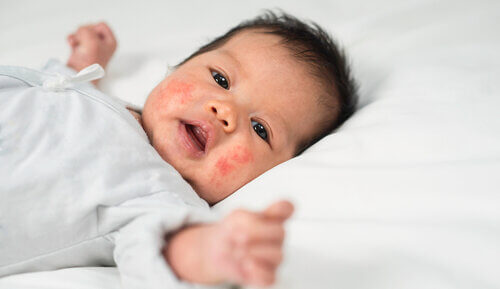
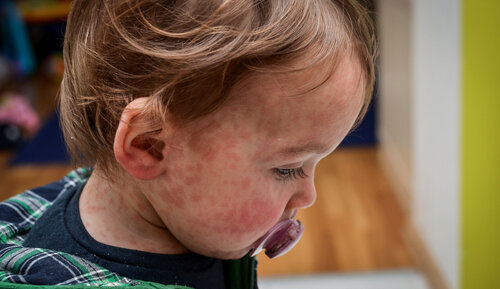
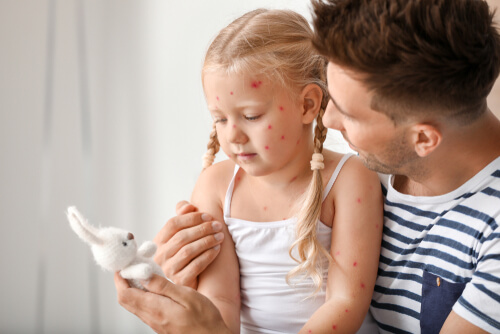
The main symptom of chickenpox is a sore and itchy rash.
- The rash can appear anywhere on the body, including inside the mouth, and may continue to break out in stages.
- Initially small red lumps will appear, which will then progress into fluid-filled blisters.
- After around a week, the blisters will dry and the scabs will fall off.
As well as a rash, there are also other symptoms of chickenpox to be aware of.
A couple of days before the first signs of the rash appear, symptoms can include:
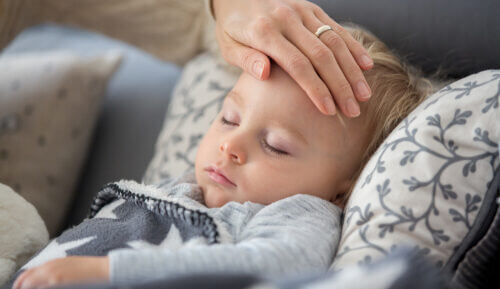
- A temperature
- Feeling achy or sore
- Feeling generally unwell, this could include headaches or feeling fatigued
- Loss of appetite
These symptoms may continue once the rash has appeared, but should only last for a few days.
How to treat chickenpox
In most cases, chickenpox can be successfully treated at home. Your child is likely to be unhappy and uncomfortable throughout, but they should start to feel like themselves again a couple of days after the spots first appear.
Your child will need to isolate until the spots have scabbed over. This means they shouldn’t attend school or see their friends during this time to avoid passing on the infection to others.
Tips from the NHS for treating chickenpox at home
- Make sure your child is hydrated – if they’re feeling unwell, they may not be eating/drinking as much as normal which puts them at risk of dehydration. Ice lollies are a great way to up their fluid intake.
- Keep fingernails short to avoid damage if they do scratch their spots.
- Try putting socks on their hands during the night to prevent them from scratching.
- Give your child paracetamol to help manage their symptoms (child-friendly medicines such as Calpol are a good option).
- Dress them in loose clothes to avoid irritation to the skin.
- Use cooling gels or creams to soothe itching and irritation.
Try to avoid:
- Ibuprofen – anti-inflammatory medication such as ibuprofen can lead to skin infection.
- Scratching – although it can be really difficult, scratching can cause lasting damage, including scarring.
- Contact with anybody who is particularly vulnerable to the virus. This includes pregnant women, newborn babies and anybody with a weakened immune system.
FAQs
How long is a child contagious with chickenpox?
Chickenpox is contagious until the last of the spots have dried and scabbed over. Until this point, children should be kept away from school and anybody who is vulnerable to the infection.
Do I need to isolate if my child has chickenpox?
Parents don’t need to isolate if their child has chickenpox, but they may wish to stay home to take care of them. Bear in mind also that if they haven’t had chickenpox themselves, parents will be at risk of catching it.
What’s the difference between chickenpox and measles?
Measles and chickenpox are caused by different viruses. Whilst both are very contagious, chickenpox is typically mild and can be treated at home, whereas measles can be much more serious. Vaccination is the only way to prevent measles and children should have their MMR by the time they’re a year old.
Expert advice straight to your inbox
Join our growing community for clear, expert guidance on finding, choosing and paying for a nursery.

Related Articles