As measles outbreaks can happen in the UK and across Europe, here is everything you need to know as a parent to protect your child at nursery and while on holiday abroad including how to spot measles symptoms and details about the MMR vaccine.
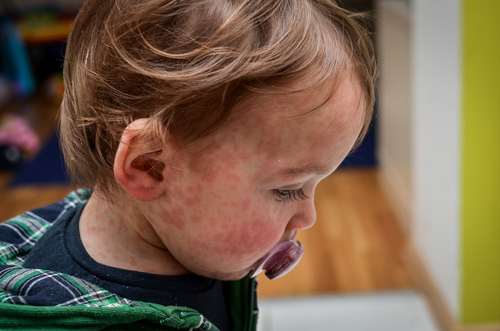
Table of contents
- What is measles?
- How common is measles?
- How serious is measles?
- How do you know if a child has measles?
- What are measles symptoms?
- How can I protect my child from measles outbreaks?
- At what age is the measles vaccine given?
- Who is eligible for MMR vaccine?
- Who cannot have the MMR vaccine?
- How effective is the MMR vaccine?
- How can I get the MMR vaccine?
- Is the MMR vaccine safe?
- What are the ingredients in the MMR vaccine?
- Does the MMR vaccine last for life?
- What if my child is too young to be vaccinated for measles?
- What should I do if I think my child has measles?
- What if my child has measles?
- What if I am pregnant and have measles?
- How long am I infectious if I have measles?
- How can I stop infecting people and spreading measles?
Table of contents
- What is measles?
- How common is measles?
- How serious is measles?
- How do you know if a child has measles?
- What are measles symptoms?
- How can I protect my child from measles outbreaks?
- At what age is the measles vaccine given?
- Who is eligible for MMR vaccine?
- Who cannot have the MMR vaccine?
- How effective is the MMR vaccine?
- How can I get the MMR vaccine?
- Is the MMR vaccine safe?
- What are the ingredients in the MMR vaccine?
- Does the MMR vaccine last for life?
- What if my child is too young to be vaccinated for measles?
- What should I do if I think my child has measles?
- What if my child has measles?
- What if I am pregnant and have measles?
- How long am I infectious if I have measles?
- How can I stop infecting people and spreading measles?
This article highlights measles symptoms and why the MMR vaccine is the safest, most effective way to protect children against measles.
What is measles?
Measles is caused by a virus that spreads when an infected person breathes, coughs or sneezes.
It can live in the air and on surfaces for up to two hours. It is extremely contagious and spreads very easily between people. This is particularly in environments like nurseries, where children play together.
How common is measles?
Since 1 January 2025 up to the week of 21 July 2025, there have been 674 laboratory-confirmed measles cases reported in England. The highest number of cases (48%) have been in London.
How serious is measles?
Measles can lead to dangerous complications, especially in children under five years old. Complications can include pneumonia, meningitis, blindness, seizures, brain swelling and death.
How do you know if a child has measles?
It is important to remember that if a person has had measles before or has had both doses of the MMR vaccine, it is unlikely they have measles.
You will know if your child has measles by checking to see if they have any of the measles symptoms highlighted below.
What are measles symptoms?
Symptoms of measles include experiencing cold symptoms initially, including:
- High fever.
- Runny nose.
- Blocked nose.
- Sneezing.
- Cough.
- Red, sore, watery eyes.
Some people may also get:
- Small, white spots in the mouth, typically lasting a few days.
This is followed a few days later by:
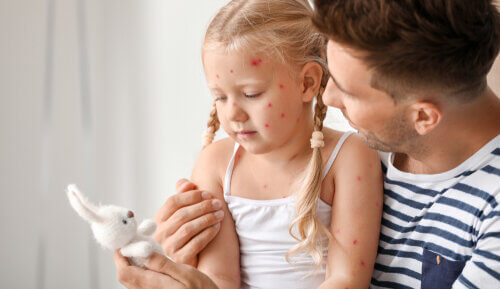
- A rash. The rash is red or brown on white skin and may be harder to see on darker skin. The rash typically starts on the face and behind the ears before spreading to the rest of the body.
Spots can be raised and form blotchy patches on the body.
How can I protect my child from measles outbreaks?
Vaccinating your child with the MMR vaccine (Measles, Mumps and Rubella) is the best way to protect your child from measles. The vaccine is free on the NHS.
‘The MMR vaccine is the safest and most effective way to protect children and staff against measles, mumps and rubella,’ states the UK Health Security Agency (UKHSA).
‘Getting the MMR vaccine not only protects the vaccinated child, but also unborn babies, infants who are too young to have the vaccine and children and adults who can’t have the vaccine because they have weakened immune systems,’ it added.
Dr Vanessa Saliba, UKHSA Consultant Epidemiologist, said: “The summer months offer parents an important opportunity to ensure their children’s vaccinations are up to date, giving them the best possible protection when the new school term begins. It is never too late to catch up. Do not put it off and regret it later.
“Measles spreads very easily and can be a nasty disease, leading to complications like ear and chest infections and inflammation of the brain with some children tragically ending up in hospital and suffering life-long consequences.
“Two doses of the MMR vaccine is the best way to protect yourself and your family from measles. Babies under the age of 1 and some people who have weakened immune systems cannot have the vaccine and are at risk of more serious complications if they get measles. They rely on the rest of us getting the vaccine to protect them.”
At what age is the measles vaccine given?
The NHS recommends:
- First dose of MMR vaccine is given to your child at 12–13 months old.
- Second dose of vaccine is given to your child when they are three years and four months old.
Babies aged between 6-12 months can have a dose of the MMR vaccine if they need it to protect them when travelling to an area with a high risk of measles, they’ve been close to someone with measles or there’s a measles outbreak.
Who is eligible for MMR vaccine?
The MMR vaccine is free on the NHS and is available to all children in the UK from the age of 12 months.
Who cannot have the MMR vaccine?
You cannot have the vaccine for measles if:
- You are pregnant.
- You have a weakened immune system (due to a health condition or medicine that suppresses your immune system).
- You had a serious allergic reaction (anaphylaxis) to any ingredients in the vaccine, including gelatine or neomycin.
- If you have a high temperature or feel very unwell. You must wait until you feel better before having the MMR vaccine.
How effective is the MMR vaccine?
Protection from measles begins after two weeks of having a dose of the vaccine.
Children are 93% protected from measles after the first dose of MMR vaccine.
Children are 99% protected from measles after their second dose of MMR vaccine.
How can I get the MMR vaccine?
The MMR vaccine is free and provided by the NHS. Your GP can give the MMR vaccine. It is administered into your upper arm or thigh.
Is the MMR vaccine safe?
The MMR vaccine is safe for the vast majority of people. The MMR vaccine is not given to pregnant women, people with weakened immune systems or those who have had a serious allergic reaction to any vaccine ingredients including gelatine or neomycin.
Anyone who is feeling very unwell and has a high temperature should not have the vaccine until their temperature is normal and they are feeling better. The NHS website states there is no link between the MMR vaccine and autism.
Common side effects can last 2 to 3 days and include:
- a blotchy rash, feeling unwell and a high temperature 7-11 days after vaccination.
- swollen glands around the cheeks, neck and jaw and aching in joints 2-3 weeks after vaccination.
What are the ingredients in the MMR vaccine?
There are two types of MMR vaccine in the UK. You can check the ingredients here for MMRVaXPro MMR vaccine and Priorix MMR vaccine.
The MMR VaxPro vaccine contains a small amount of gelatine from pigs. If you wish, you can ask the person vaccinating your child to give you the Priorix MMR vaccine instead.
Does the MMR vaccine last for life?
Yes, if you have two doses of the MMR vaccine, you are protected from measles, mumps and rubella for life.
What if my child is too young to be vaccinated for measles?
Children aged under 12 months are too young for the first MMR dose.
To help protect children under 12 months:
- Ensure everyone around your child is vaccinated, including parents, siblings, nanny etc.
- Avoid crowded/ high-risk areas during measles outbreaks.
- Breastfeeding may provide some maternal antibodies, but it is no substitute for vaccination
You can also ask your child’s nursery about their immunisation policy:
- How do they handle measles outbreaks/ exposure at nursery?
- Do they require proof of vaccination for each child at nursery?
- Are staff members vaccinated against measles?
What should I do if I think my child has measles?
Ask your GP for an urgent appointment or call NHS 111 if:
- You think you or your child may have measles.
- You or your child feels very unwell or you’re worried something is seriously wrong.
- Your child is under one years-old and has come into contact with someone who has measles.
- You have been in close contact with someone who has measles and you are pregnant or have a weakened immune system.
- Your baby or young child is not feeding well or taking less feeds/ fluids than usual.
- You or your child are urinating less than usual (your baby has fewer wet nappies).
- You or your child have a high temperature that has not come down (after having paracetamol or ibuprofen).
What if my child has measles?
There are steps you can take to help your child, if a GP has identified that your child has measles.
You can tackle your child’s symptoms and reduce the spread of infection by ensuring your child:
- Drinks lots of water to avoid dehydration.
- Gets plenty of rest.
- Has paracetamol or ibuprofen to bring down your child’s temperature. Check with a pharmacist that the medicine is suitable for your child.
- Has crusts gently removed from their eyes by using cotton wool soaked in warm water.
As a result of the steps above, measles could start to look better after a week.
However, you must call 999 or go to the Accident and Emergency department of your nearest hospital if your child has measles and has:
- Difficulty breathing (baby is grunting or baby’s stomach is sucking in under ribcage, child is gasping, choking or has difficulty talking).
- A rash that does not fade when you press a glass against it.
- Unable to stay awake or keep eyes open for more than a few seconds.
- Crying non-stop.
- A stiff neck or finds light uncomfortable or painful.
- Limp, floppy or not responding normally. Child’s head fall to the side, backwards or forwards, or child struggles to lift their head and focus on your face.
- Behaving differently, unsettled or confused.
- A seizure.
What if I am pregnant and have measles?
If you get measles when you’re pregnant, get an urgent appointment with your GP or call NHS 111. Measles while pregnant could harm your baby by causing a miscarriage, stillbirth, premature birth or cause your baby to have a low birthweight.
How long am I infectious if I have measles?
You are infectious from when you first have symptoms (around four days before the rash appears) until four days after you get the rash.
How can I stop infecting people and spreading measles?
To stop the spread of measles infection:
- You and your child must stay at home if your child or you have measles symptoms (usually four days before rash appears) until at least four days after a rash appears.
- You and your child must stay away from nursery, work and other babies, children, pregnant women, people with weakened immune systems and unvaccinated people. Try to avoid contact with your child’s siblings who may be at a different school. Avoid contact with visitors to your home.
- Do not share cups, utensils, towels, bedding, clothes with others.
- Dispose of used tissues in the rubbish bin.
You can teach your child good hygiene by encouraging your child to:
- Cover their mouth and nose with a tissue or elbow if sneezing or coughing.
- Wash their hands regularly with soap (especially before eating and after using the toilet).
- Not sharing drinking cups, bottles, or utensils.
Search for a nursery
What are measles symptoms?
Measles symptoms include: cold symptoms such as high fever, runny or blocked nose, sneezing, coughing, red, sore, watery eyes, small white spots in the mouth or a red or brown rash on the face or behind the ears.
Is the MMR vaccine safe?
‘The MMR vaccine is the safest and most effective way to protect children and [nursery] staff against measles, mumps and rubella,’ states the UK Health Security Agency (UKHSA). ‘Getting the MMR vaccine not only protects the vaccinated child, but also unborn babies, infants who are too young to have the vaccine and adults who can’t have the vaccine because they have weakened immune systems,’ it added.
The NHS states there is no link between the MMR vaccine and autism. The MMR vaccine is not given to pregnant women, people with weakened immune systems or those who have had a serious allergic reaction to any vaccine ingredients including gelatine or neomycin.
How can I stop spreading measles?
You and your child must stay at home if your child or you have measles symptoms (usually four days before rash appears) until at least four days after a rash appears. Stay away from nursery, work and other babies, children, pregnant women, people with weakened immune systems and unvaccinated people.
Do not share cups, utensils, towels, bedding, clothes with others. Dispose of used tissues in the rubbish bin.
Related Articles