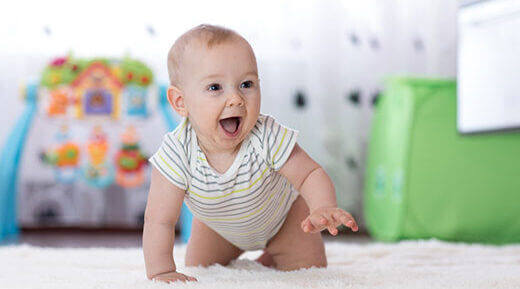
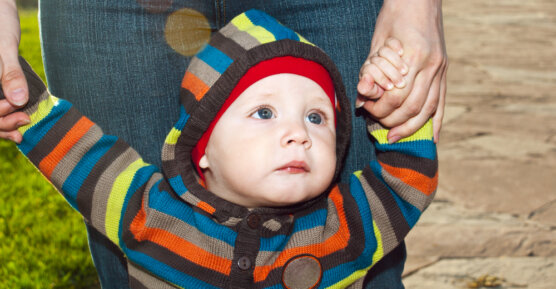
The moment your baby becomes mobile and starts exploring the world independently is an exciting time but when do babies crawl and what should parents expect?
In this guide, we’ll explain the typical baby crawling age, the different crawling styles, signs your baby is ready and how you can support their development.
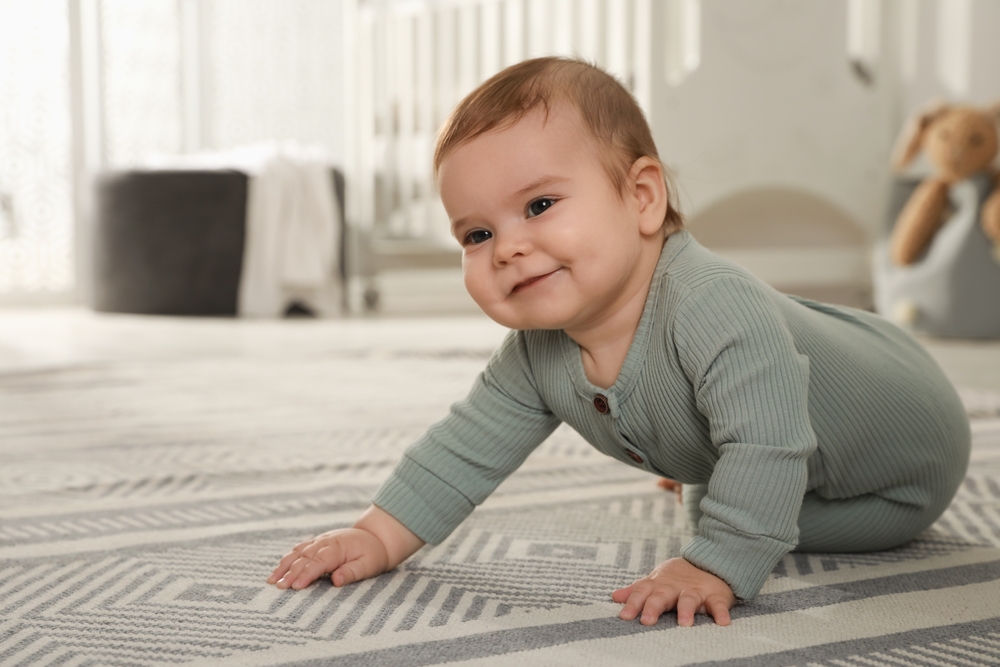
Table of contents
- At what age do babies crawl?
- Signs your baby is ready to crawl
- What are the different types of crawling?
- Why is crawling important?
- Can babies crawl backwards first?
- When do babies crawl compared to other milestones?
- What if my baby doesn’t crawl?
- How do I encourage my baby to crawl?
- How can I prepare my home for a crawling baby?
- How can I support my child’s development?
Table of contents
- At what age do babies crawl?
- Signs your baby is ready to crawl
- What are the different types of crawling?
- Why is crawling important?
- Can babies crawl backwards first?
- When do babies crawl compared to other milestones?
- What if my baby doesn’t crawl?
- How do I encourage my baby to crawl?
- How can I prepare my home for a crawling baby?
- How can I support my child’s development?
At a glance
- When babies start crawling: Most babies begin crawling between 6 and 10 months, although some may start earlier, later, or skip crawling altogether.
- Early development milestones: Before crawling, babies usually build strength through tummy time, rolling over, and learning to sit independently.
- Signs of readiness: Babies may be ready to crawl when they start rocking on hands and knees, pushing up during tummy time, or reaching for toys just out of reach.
- How to encourage crawling: Providing regular tummy time, safe floor space, and engaging toys can help support movement and exploration.
At what age do babies crawl?
Most babies begin crawling between 6 and 10 months old.
However, every child develops at their own pace, so some babies may start earlier while others may skip crawling altogether and move straight to standing or walking.
Before crawling, babies usually go through several important developmental stages:
- 3-4 months: Improved head and neck control during tummy time.
- 4-6 months: Rolling from tummy to back and vice versa.
- 6-8 months: Sitting independently.
- 6-10 months: Beginning to crawl or move across the floor.
If your baby hasn’t started crawling by 10 months, it’s usually not a cause for concern because development varies widely from child to child.
Signs your baby is ready to crawl
Babies show several signs before they begin crawling. These indicate they’re building the strength and coordination needed for movement.
Common signs your baby is ready to crawl include:
- Pushing up onto hands during tummy time
- Rocking back and forth on hands and knees and getting up on all fours.
- Trying to move forward but sliding backwards
- Reaching for toys just out of reach
- Rolling.
- Pivoting or spinning while on their tummy
These early movements help strengthen muscles in the arms, shoulders, core, and legs which are essential for crawling.
What are the different types of crawling?
Not all babies crawl in the same way. In fact, there are several crawling styles that are completely normal.
Classic crawl
This is the most recognised style with babies move on hands and knees, alternating opposite arm and leg.
Commando crawl
Sometimes called the army crawl, babies drag their tummy along the floor using their arms.
Bottom scoot
Some babies move while sitting upright, moving along on their bottom.
Bear crawl
Babies crawl with straight arms and legs, keeping their bottom high in the air.
Crab crawl
Moving sideways like a crab.
Backwards crawl
Crawling backwards
All of the above crawls are normal ways for babies to learn mobility and are no cause for concern.
Instead of crawling, some babies roll or shuffle to get where they want to go.
Why is crawling important?
Although some babies skip it, crawling can support several areas of development.
Benefits include:
- Building muscle strength in arms, legs, and core.
- Improving coordination between both sides of the body.
- Supporting balance and spatial awareness.
- Helping develop early problem-solving skills.
- Allows babies to explore their environment, which supports cognitive and sensory development.
Can babies crawl backwards first?
Many babies crawl backwards before they learn to move forwards. This happens because they are pushing strongly with their arms before they’ve learnt to coordinate their legs.
Crawling backwards is a normal stage of development and usually resolves on its own with practice.
When do babies crawl compared to other milestones?
On the subject of a baby crawling age, crawling usually happens alongside other major developmental milestones.
Below shows a typical timeline but bear in mind, these are averages.
Many babies develop outside this timeline and are perfectly healthy.
| Age | Milestone |
| 4–6 months | Rolling |
| 6–8 months | Sitting without support |
| 6–10 months | Crawling |
| 9–12 months | Pulling to stand |
| 12–15 months | Walking |
What if my baby doesn’t crawl?
Some babies never crawl at all and instead go straight from sitting to standing or walking. This is more common than many parents realise.
A late crawler does not mean your child will be a late walker.
One mum said: “My daughter cracked crawling and walking in the same week so never really did it [crawling] much. My dad said I was the same.
“I never did tummy time with her. Not doing tummy time was probably why she crawled late.
She was an early walker at nearly 11 months doing it completely unaided.”
While it is common for some babies to walk but skip crawling, you may want to speak with your health visitor or GP if your baby:
- Shows no interest in movement by around 10–12 months
- Cannot sit independently by 9 months
- Seems very stiff or very floppy
- Favors using only one side of the body
Most delays are minor and resolve naturally, but professionals can offer guidance, if needed.
How do I encourage my baby to crawl?
While babies develop naturally, there are simple ways to encourage movement and build the muscles needed for crawling.
1. Create safe floor space
Give your baby plenty of safe, open space on the floor where they can practise moving.
2. Dress them for the task
Make sure your child is wearing soft, loose clothes to enable them to move freely.
3. Get down on the floor with them
Babies love imitation. Crawling around with your baby can encourage them to try the movement themselves.
4. Prioritise tummy time
Tummy time strengthens your baby’s neck, arms, and shoulders which is crucial for crawling.
Some children don’t like being put on their front, but it’s good for developing head control and upper body strength.
Next they would be reaching, grabbing and supporting their body weight.
Aim for several short tummy-time sessions each day.
5. Place toys slightly out of reach
Encouraging your baby to reach or move towards a toy motivates them to experiment with movement.
How can I prepare my home for a crawling baby?
Once babies become mobile, they can reach places they couldn’t before.
Creating a safe environment allows your baby to explore confidently.
Childproofing becomes essential.
Childproofing safety tips include:
- Cover electrical outlets.
- Secure furniture to the wall.
- Install stair gates.
- Keep small objects out of reach.
- Lock cupboards containing cleaning products.
While most babies start crawling between 6 and 10 months, but there’s a wide range of normal development. Some babies crawl early, some later, and others skip crawling altogether.
How can I support my child’s development?
No matter whether your child starts crawling or skips it altogether, the most important thing parents can do is provide plenty of safe floor time, encouragement and opportunities for movement.
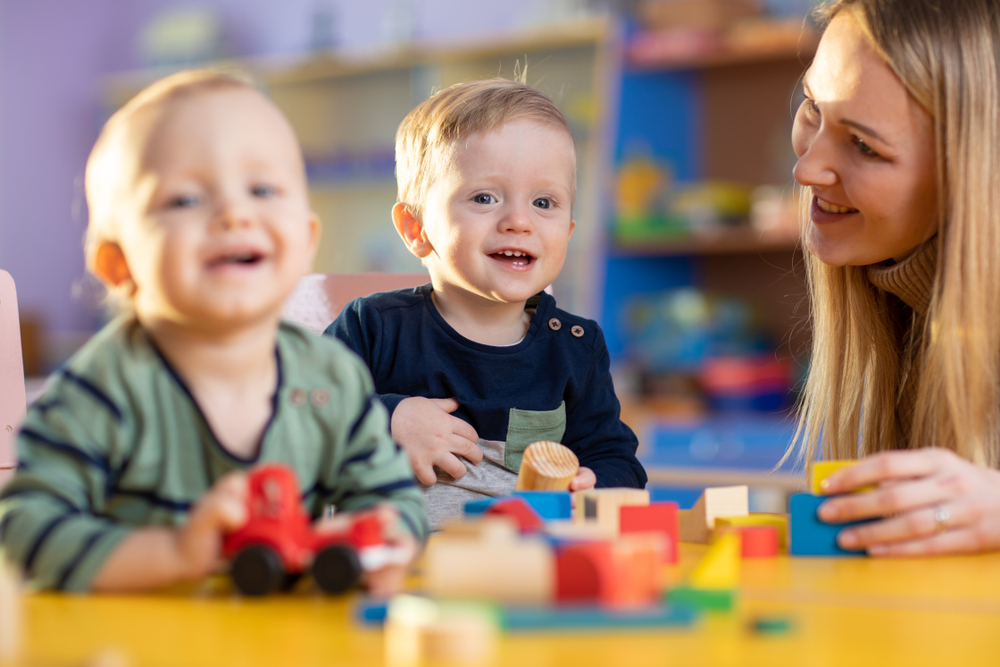
A high-quality nursery environment provides plenty of space, sensory play, and supervised floor time, which support physical development like crawling.
Trained and experienced early years professionals understand developmental milestones and can work with parents to encourage movement through play, interaction, and structured activities.
If you’re looking for the right childcare setting, you can explore nurseries near you on daynurseries.co.uk, where UK parents compare facilities, read reviews and find the best environment for their child’s development.

Find a nursery near you
FAQs
Signs your baby is ready to crawl
Signs your baby is ready to crawl indicate they’re building the strength and coordination for movement. Common signs include: pivoting or spinning while on their tummy, pushing up onto hands during tummy time, rocking back and forth on hands and knees and getting up on all fours, trying to move forward but sliding backwards, reaching for toys just out of reach and rolling.
At what age do babies crawl?
Most babies begin crawling between 6 and 10 months old. However, every child develops at their own pace, so some babies may start earlier while others may skip crawling altogether and move straight to standing or walking. If your baby hasn’t started crawling by 10 months, it’s usually not a cause for concern because development varies widely from child to child.
What are different types of baby crawling?
What are the different types of crawling?
Not all babies crawl in the same way. Your baby may move on hands and knees, alternating opposite arm and leg -the classic crawl. Others do the ‘commando crawl’ dragging their tummy along the floor using their arms. There is also bottom scooting -moving while sitting upright, moving along on their bottom. A bear crawl with straight arms and legs involves keeping their bottom high in the air. They may move sideways like a crab or even crawl backwards.
Expert advice straight to your inbox
Join our growing community for clear, expert guidance on finding, choosing and paying for a nursery.

Related Articles