The summer holidays are here and keeping children entertained can be a challenge. Childcare during the summer holidays can be costly but there are plenty of cheap and free summer activities for kids and parents to do together.
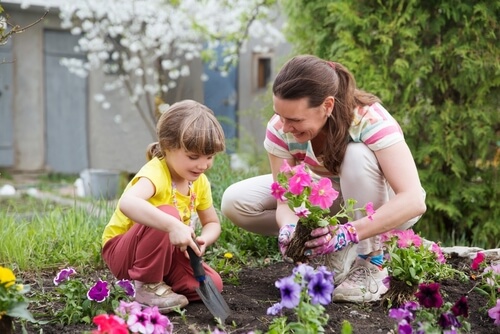
Table of contents
At a glance
Explore free local days out: Libraries, parks, museums, galleries, farms and nature walks can provide affordable ways for families to enjoy the summer together.
Get creative at home: Children can stay entertained with arts and crafts, homemade houses, story writing, baking, science experiments and imaginative role play.
Enjoy nature and gardening: Indoor or outdoor gardening, wildlife projects, fairy houses and nature crafts can help children learn about and engage with the natural world.
Keep children active through play: Dens, playground games, ball games and homemade obstacle courses offer simple ways for children to have fun while developing physical and social skills.
Free and discounted days out for kids during the summer holidays
Libraries
Libraries often do summer reading challenges, alongside regular events for young children, such as rhyme time and story times.
Being read to daily and exploring age-appropriate books independently has a powerful effect on children’s cognitive, academic, communicative, social and emotional skills, as well as their imagination.
Studies show that being read to each day comes with a host of cognitive, mental and even physical benefits. By the age of nine, it’s even been found that children who read for pleasure have better mental health, better behaviour, better sleep and even physically bigger brains than children who do not read for pleasure.
Farms
Farms are a wonderful place for children to visit. As well as seeing (and maybe feeding) animals, many have play areas and tractor rides.
Often these do cost money but some farms offer heavy discounts or free entry over the summer.
Parks, nature walks and country houses
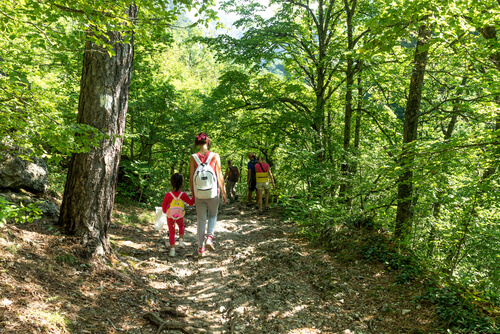
If you live in the countryside, a (small child sized) walk outdoors is free, healthy for mind and body and a lovely way to spend time together. You may even be able to see local wildlife or farm animals along the way.
If you don’t live in the countryside, public gardens, parks and nature reserves can provide a great experience.
If you’re new to your area or just looking for something new, there are plentiful apps or websites (like this National Trust walk finder) where you can find walking routes near you. The National Trust also have some wonderful properties to visit.
Museums, galleries and discounted attractions
If you live in a town or city, or have easy access to one, make the most of local museums and galleries. Many of these are free and offer child-friendly areas or activities.
If you receive Universal Credit, you may be able to get a discount or free entry to some attractions through Kiddo Adventures and anyone can get Kids Pass which offers deals and discounts on a wide range of outings and attractions.
Cinema summer discount
Cineworld do a £1 family film offer on certain screenings from 25 July to the end of August.
Have a look at their website to see what’s on in your area.
My Pet Pals workshops
Pets at Home run free workshops over the summer where children can learn about animal care. They are recommended for age 4+ but do accept younger children.
You can book your place online at your local Pets at Home shop.
Gardening workshops
Dobbies Garden Centres offer Little Seedlings gardening workshops for children aged 4-10. They run special sessions over the summer but if your child enjoys them they can continue to attend every first Sunday of the month during term time as part of the Little Seedlings Club.
You can book online on the Dobbies website.
Expert advice straight to your inbox
Join our growing community for clear, expert guidance on finding, choosing and paying for a nursery.

Free indoor and garden activities for kids during the summer holidays
Arts and crafts
Arts and crafts are a great way for children to express themselves and there are plentiful options that don’t need to cost much at all, if anything.
Possible arts and craft activities include:
- Colouring and drawing
- Painting, including freehand with a paintbrush, paint-by-numbers (if your child knows numbers yet), finger painting or using potato stamps
- Making toys from recyclables, like cardboard boxes and plastic bottles
- Making jewellery, from beads on string and friendship bracelets to more complex kits available online and in craft shops
- Pompoms
Make a doll’s house
If you’re looking for an arts and crafts project, you could consider making a doll’s house together.
As Phoebe from the TV show Friends once proved, hand-making a doll’s house gives ample opportunity to use imagination and resourcefulness with some cardboard boxes and bits and bobs you have lying around. As well as building the house itself, there is also decorating it, making furniture and even making dolls and their outfits.
Make a fairy house
Fairy houses need to include lots of natural materials as that’s what fairies like. Think moss for carpets and bedding, furniture made of sticks and pebbles and flowers for decoration.
You may choose to use an old bird house or disused pet hutch as these are waterproof.
Write and illustrate a book together
Items needed:
- Paper
- Stapler, ring binder or needle and thread to bind it
- Pens
- Imagination
Your story can then be adapted into a play or home-film, if you have enough people/cuddly toys and dolls to play the parts.
Bake or cook together
Baking or cooking together is a lovely way to bond and to teach your child important skills. Whether you want to make sweet treats or healthier options, your child will build their skills in preparing food, following instructions, motor skills and even maths.
There are some nice recipes here.
Science experiments
You don’t need a chemistry kit or a bolt of lightning to teach your kids about science. Many child-friendly science experiments use everyday items you already have at home.
Here are some good science experiments for under 5s.

Find a nursery near you

Gardening indoors
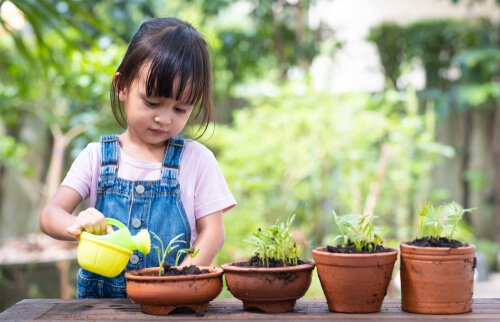
Due to the weather, free summer activities for kids can’t always be outdoors. If it’s raining or you don’t have access to a garden, children can still enjoy nature with some indoor gardening.
You’ll need some flowerpots and soil/compost; although cress can be grown on a bit of damp kitchen roll laid flat on a plate or stuffed into an empty eggshell for ‘cress hair’. You may also want something to label the plants with, such as ice lolly sticks. You can also buy kits specially for kids.
Some plants take better to being grown indoors than others. Bear in mind that if growing vegetables, you may not need to go and buy the seeds, you can often take them straight from your scraps or just plant the whole vegetable (such as a potato or an onion, for which this works well).
Plants that can be easily grown indoors include:
- Cress
- Peppers
- Tomatoes
- Radishes
- Onions
- Potatoes
- Herbs
- Grass heads
Gardening outdoors
Gardening has many benefits for children and adults alike and is a great way for your child to learn about nature and enjoy a sense of responsibility and accomplishment.
You may want to get your child involved with tasks that need doing or set them up with a little growing patch of their own.
Den making
Children love making dens (or forts). They may fill their den with their toys and books and want to spend time in there so make sure it’s located somewhere it can stay up for at least a few days, especially if a lot of time and love has gone into building it.
If it is raining and you are stuck indoors, you can use a big sheet and put it over some chairs to create a den in a matter of seconds.
Role play
Role play is a fun way for children to develop their communication and to learn new skills that they can go on to use in real life.
There are many role plays you could set up at home, such as:
- Shopkeeper and shopper (great for learning how to buy things and use money)
- Teacher and student (good for if your child will be starting school in September)
- Doctor or vet and patient
- Restaurant worker and customer
- Tea party host and guest
Outdoor crafts and painting
Arts and crafts outdoors allows you to worry less about mess, though the wind can be a problem if trying to use paper or anything easily knocked over/blown away.
Ideas for outdoor arts and crafts include:
- Making things with clay
- Painting pebbles
- Messy painting (using hands, paint balloons, water pistols filled with diluted paint)
- Nature collages
Making food and shelter for wildlife
Whether your garden is rural or urban, making food and shelter for wildlife is a lovely way to support nature and teach your little one about animals and the environment.
Wildlife-supporting things you could create together include:
- Make and hang seed cakes for birds
- Build a hedgehog house from wood or bricks
- Decorate a bird house together
- Plant flowers and make a bee hotel
Brewing potions
Potions are an important skill in any young witch or wizard’s repertoire and use all-natural ingredients such as flowers, leaves, stones and mud.
Just make sure not to tell your child that the potion does anything good, you don’t want them to drink it.
Traditional playground games
Playground games and rhymes are particularly good if you have several children to entertain, plus they offer the chance to build social and communication skills while getting some exercise.
Some games include:
- Skipping
- Hopscotch
- Simon says
- Duck, duck, goose
- What’s the time Mr Wolf?
- Hide and seek or sardines (if you have the space)
Ball games
Great for motor skills, simple ball games need minimal equipment and are a lot of fun.
You may want to try:
- Throw and catch
- Hot potato
- Football
- Basketball
- Bat and ball games; if you’re going to play rounders or cricket, use a softer ball than you would with older children
Obstacle course
If your child has a lot of energy to burn and is old enough to safely take part in an obstacle course, you could make one together in the garden.
Related Articles