While children with Special Educational Needs and Disabilities (SEND) are welcome and supported in mainstream nurseries, some do better with more specialist care. Specialist SEND nurseries offer facilities, resources and a staff skillset that can often be the best fit for a child with additional needs.

Table of contents
For a child with additional needs, early intervention can be crucial in helping a child reach their full potential. Yet finding the right nursery for your child can be a challenge.
It can be hard to find a place at a specialist nursery
Mainstream nurseries can struggle to give the right care to children with additional needs. They may not have the specialist training and the required child to staff ratio.
In order to attend a specialist early years setting, your child will usually need to be referred by a healthcare professional or a social worker. It can be hard to find a place as they are few in number and may have a long waiting list.
Staff at SEND nurseries are highly trained in looking after children with complex needs. Staff should make sure they understand the child and their needs before they begin attending the setting.
Lucy Oliveira, Sarah Percival and Zoe Tearle co-founded Carter’s Sunflowers. It’s an inclusive nursery in Hertfordshire for children with additional needs, particularly autism. Lucy Oliveira says: “We always meet with the family before to find out information about the child and what they need. We also offer a settling-in session. We provide a photo book for each child which includes pictures of the nursery, staff and the routine to help children become familiar before they start. Also we ask parents to complete an ‘all about me’ book. We have all the relevant information to fully settle the child when they start with us.”

What special facilities does a SEND nursery have and what is the learning environment like?
Specialist nurseries have resources and toys that are accessible. They also have equipment designed to support children’s physical, social, personal, communication and emotional development.
Carter’s Sunflowers nursery has sensory walls to allow children to explore touch, sound and develop their visual tracking skills. It also has a calm area with a large bubble tube and fibre optic lights to support regulation, as well as sensory circuits, swings and trampolines.
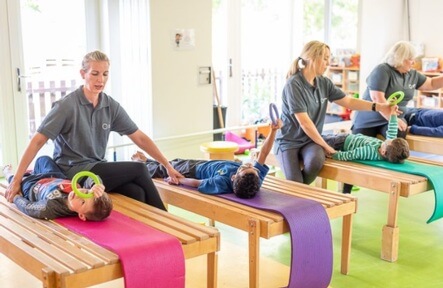
Similarly, the Rainbow Hub nursery in Lancashire has a sensory room with an interactive mat. They also have an active movement room, which is indoor soft play, and a music and movement room.
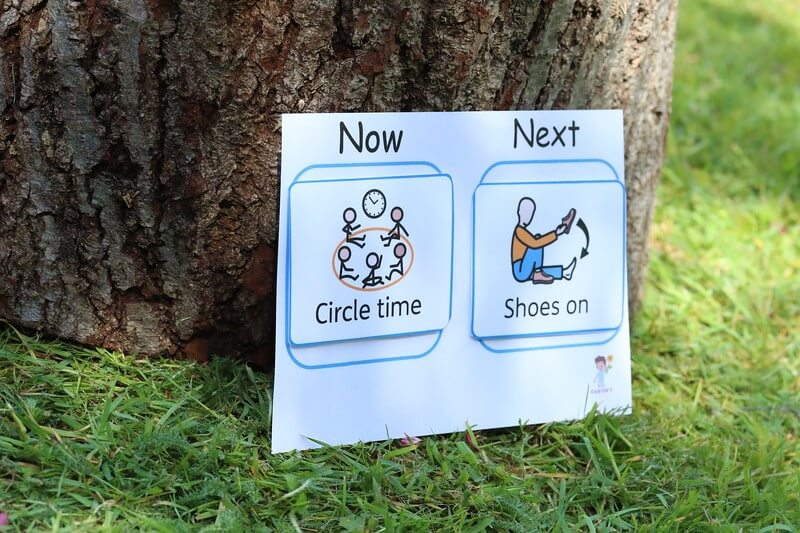
Some children, such as those with autism, can be sensitive to noise. Zoe Tearle at Carter’s Sunflowers nursery reveals: “We use a range of different strategies and resources for children who are hypersensitive to sound. We prepare children by using consistent routines and visuals, so they know what to expect. All our practitioners are aware of children’s needs and are trained in sensory processing which helps them easily identify triggers.”
Classes at SEND nurseries also tend to be smaller. This allows each child more time to develop life skills with staff, and reduces noise. They can also have time out if they are feeling overwhelmed or upset, or if they display challenging behaviour.
Lyndsay Fahey is chief executive at the Rainbow Hub. The charity provides therapeutic services to children and young people with neurological conditions and brain injuries.
The Rainbow Hub has opened a nursery for children with a range of conditions, such as cerebral palsy, Williams Syndrome and acquired brain injury.
She explains that at Rainbow Hub: “We have break away rooms for the children to go to with their key workers to relax, calm or soothe when the children are feeling overwhelmed by noise or sensory input. Cosy dens are situated in all learning environments to allow children to break away from the noise or group if needed and experience the one-to-one time with their key worker or familiar adult.
“Our learning environments are set up specifically to focus on the children’s individual needs and interests. It will help to distract, support and eliminate challenging behaviour. Our break away rooms, such as active movement and sensory rooms, can be used to relieve the tension, built up energy or frustration within the child in a fun and exciting way. We also encourage the children daily to understand and control their own feelings and behaviours through a variety of activities and strategies.”
The environment can be crucial with the interior of Carter’s Sunflowers. It has been designed to encourage communication and interaction, with a low arousal environment enabling children to focus their attention and learn new skills.
Children at the nursery are given a mixture of child led play opportunities, small group teaching and 1:1 structured interventions. They are specifically designed to focus on the difficulties children face with social communication, shared attention, play and self regulation.
Early years support plans for children with SEND
All nurseries follow a curriculum to support children to meet their developmental goals and a SEND nursery is no different.
At Rainbow Hub, focus is put on what each child can do, rather than what they can’t. Extra planning goes into their care.
The curriculum is made up of daily experiences which strongly promote the prime areas of the EYFS in a highly effective way for all children with additional needs. “These daily experiences are both beneficial and challenging for the children. They provide a safe environment for them to grow and thrive independently,” says Ms Fahey.
“The children will be supported by individual target plans (TLPs), individual mapping provisions and care plans. These are put in place with both the Parent and the Key Worker’s input, to ensure the children’s needs are being met and their targets are achievable each term.
“In addition to highly experienced key workers, children also benefit from accessing Rebound Therapy and communication during their stay. Families will also have the option of their child accessing our specialist therapy, Conductive Education.”
At Carter’s Sunflowers, Individual Education Plans (IEP) set out each child’s next steps.
The IEP sets out how they are going to achieve it, what that looks like for the individual child and what the adults can do to support them achieve.
“We include parents’ views as part of the IEP process and ask them to provide a target we can all work on that is relevant for home life. This is reviewed each term.
“All children are assessed within the first 6 weeks of joining our nursery. Through that assessment we plan our early years curriculum. It is developmentally appropriate for each child, including children’s interests to engage them and get them excited about learning. Our curriculum includes, not only the requirements of the EYFS, but also a range of additional opportunities to support our children’s communication, social interaction and emotional regulation skills,” says Ms Oliveira.
Staff training for additional needs
Staff at specialist nurseries have extra skills and training in order to understand the additional needs of the children. They are able to provide a higher level of medical care.
The team at the Rainbow Hub are highly trained in both early years education and early years care. “We update all our training regularly and ensure staff knowledge and understanding is strong, especially in key areas such as SEND, seizures, first aid, manual handling, safeguarding children especially children with disabilities, Gastro feeding and much more. As an organisation we have been offering specialist therapies to disabled children for over 20 years. Our staff have extensive knowledge and experience in helping children to overcome their difficulties and enabling them to achieve their full potential.
“Our nursery offers an extremely low staff to children ratio. This is to enable the care and safety of all the children to remain strong. One to one staffing is available and would be discussed with the parent on their first visit to the nursery,” says Ms Fahey.
Ms Tearle at Carter’s Sunflowers adds: “On top of early years training all our staff must complete a level 2 in understanding autism, this qualification covers sensory processing, behaviour that challenges and communication. Our staff are also trained in SCERTS, Makaton, PECS, attention autism and Theraplay.”
Transitioning to school
Like any other nursery, specialist nurseries prepare each child for that crucial transition to school. This can involve working alongside specialist SEND schools to ensure that teaching and support staff there understand the needs of the child before they arrive.
Carter’s Sunflowers, which is a fairly new setting, believes it is very important to build good relationships with local specialist and mainstreams schools. This is key for a positive transition and giving children the best start in a new setting.
“We invite the school into our setting to observe, share strategies, assessments and the child’s IEP. We work on school ready skills to prepare children to understand the expectations and help them become more independent throughout the year.”
The Rainbow Hub nursery offers a school readiness programme to support and prepare the children ready for their school transition. It also works closely with other settings and schools to ensure the child’s learning needs are being supported. All key information is shared between all parties to help keep the child’s development continuous and progressing forward. Once they have begun school, children can continue to attend the Conductive Education service for as long as they require.
Supporting families
Caring for a child with additional needs is not just about the child. Parents know the child better than anyone else and are often juggling many things. Communicating with the parents can ensure the nursery provides the right and appropriate support.
Many specialist nurseries will have parent support workers and offer opportunities for parents to socialise together as well as family days, as well as signpost financial help and practical support from other agencies.
Useful links
To learn more about or contact Carter’s Sunflowers day nursery, visit their website. Carter’s Sunflowers is currently fundraising for a bigger building to support more families. If you would like to find out more and donate, please see their GoFundMe page.
To learn more about or contact Rainbow Hub nursery, visit their website.
You can seek further advice on childcare and support based on your location and their needs through the following bodies:
England
Council for Disabled Children’s IAS service
Email: CDCquestions@ncb.org.uk
Scotland
Enquire
Telephone: 0345 123 2303
Wales
SNAP Cymru
Telephone: 0808 801 0608
Email: enquiries@snapcymru.org
Northern Ireland
SENAC
Telephone: 028 9079 5779
Related Articles