
Nursery nap time follows a routine that is more carefully worked out than most parents realise. From 1 September 2026, safer sleep requirements are also written into law in England.
Safe sleep for babies at nursery in England is governed by the Early Years Foundation Stage (EYFS) statutory framework. This sets the legal standards every registered early years setting in England must meet. The requirements reflect NHS guidance that most nurseries already follow.
The EYFS applies in England only. Scotland, Wales and Northern Ireland set their own early years standards.
Here’s what to expect, and what you can ask about your own baby’s naps.

Table of contents
- At a glance
- What are the safe sleep guidelines for babies at nursery in England?
- What is changing to safe sleep guidance for nurseries in England in September 2026?
- Do the same safe sleep rules apply across the UK?
- How should my baby be put to sleep at nursery?
- Where should babies sleep at nursery?
- What should and shouldn't be in a nursery cot?
- How should nursery staff monitor a sleeping baby?
- How do nurseries prevent babies from overheating while sleeping?
- What happens if my baby falls asleep in a pushchair or car seat?
- What if my baby sleeps differently at home?
- What should I ask my nursery about safe sleep?
- What should I do if I'm worried about how my baby sleeps at nursery?
- Next steps
- FAQs
Table of contents
- At a glance
- What are the safe sleep guidelines for babies at nursery in England?
- What is changing to safe sleep guidance for nurseries in England in September 2026?
- Do the same safe sleep rules apply across the UK?
- How should my baby be put to sleep at nursery?
- Where should babies sleep at nursery?
- What should and shouldn't be in a nursery cot?
- How should nursery staff monitor a sleeping baby?
- How do nurseries prevent babies from overheating while sleeping?
- What happens if my baby falls asleep in a pushchair or car seat?
- What if my baby sleeps differently at home?
- What should I ask my nursery about safe sleep?
- What should I do if I'm worried about how my baby sleeps at nursery?
- Next steps
- FAQs
At a glance
- Safe sleep becomes law: From 1 September 2026, England’s EYFS framework requires registered nurseries to follow specific safer sleep standards that Ofsted will check during inspections.
- Babies sleep on backs: Children under 2 must be placed on their backs in their own clear, flat and firm sleep space, while babies aged 12 months and under must sleep in a cot.
- Staff must monitor sleep: Sleeping children must remain within sight and hearing of staff. They must be checked frequently, with an adult staying in the room for babies under 6 months.
- Parents can check practices: Parents can ask about cot arrangements, sleep checks, staff supervision, temperature management and the nursery’s written safer sleep policy, and raise concerns with management or Ofsted when necessary.
What are the safe sleep guidelines for babies at nursery in England?
Children under 2 must be placed on their back, in a sleep space of their own, on a clear, flat, firm surface. Babies aged 12 months and under must sleep in a cot. No child’s head may be covered.
These rules come from the safer sleep guidance for early years providers, written by the Department for Education with The Lullaby Trust. Your nursery may not settle your baby exactly the way you do at home. The Department for Education is clear that parental permission does not override the safer sleep requirements.
What is changing to safe sleep guidance for nurseries in England in September 2026?
From 1 September 2026 the safer sleep rules move into the EYFS framework itself. Ofsted will have the job of checking them at every inspection. The framework used to point nurseries to NHS advice instead. If your nursery already follows that advice, your baby’s day won’t change.
The change followed campaigning by The Lullaby Trust and the Campaign for Gigi, set up by the parents of 9-month-old Genevieve Meehan, who tragically died at a nursery in Stockport in 2022.
The Department for Education published the final frameworks in July 2026, and they take effect on 1 September. Ofsted’s updated inspection toolkit starts the same day, covering every early years inspection in England.
The Department for Education wrote to providers in March 2026 telling them to comply straight away, and published the detailed guidance in April. September is the point at which it becomes law, and at which the requirements become harder to misread and easier to inspect.
Do the same safe sleep rules apply across the UK?
The basic principles of safer sleep are similar across the UK, including putting babies on their backs to sleep and providing a clear, flat and separate sleep space. However, the rules nurseries must follow are different in England, Scotland, Wales and Northern Ireland.
Scotland: Nurseries and other early learning and childcare settings follow Scottish standards and guidance rather than the EYFS. Scottish Government and NHS Scotland safer sleep guidance says babies should be placed on their backs for every sleep in a clear, flat and separate sleep space, such as a cot or Moses basket. Babies should also sleep in the same room as an adult for the first six months.
Wales: Registered childcare providers follow the Welsh Government’s National Minimum Standards for Regulated Childcare. These require appropriate cots or other furniture for children to rest or sleep, and sleeping babies must be frequently checked by a member of staff. Everyone providing care must also be aware of guidance on sleeping babies.
Northern Ireland: Nurseries follow Northern Ireland’s Minimum Standards for Childminding and Day Care rather than the EYFS. Full day care settings must have a separate sleeping room for babies and safe, age-appropriate sleeping arrangements for other children.
If your child attends a nursery outside England, ask the setting about its safer sleep policy and how it applies the guidance and standards for your nation.
How should my baby be put to sleep at nursery?
Staff put your baby down on their back, in their own cot, for every nap. Sleeping on their back keeps the airway clear and reduces the risk of sudden infant death syndrome (SIDS).
Front and side positions carry a higher risk, so they are not used as a starting position. This applies, even for a baby who seems to prefer them. The NHS and The Lullaby Trust have both advised back sleeping from the start of every sleep since the Back to Sleep campaign of the early 1990s.
Once your baby can roll from back to front and back again without help, they can find their own position. Staff will still put them down on their back, then let them settle where they end up. You don’t need to picture your rolling 7-month-old being turned over all afternoon.
If your baby has reflux, a medical condition, or anything else that makes you wonder whether back sleeping is right for them, ask your GP or health visitor. Your nursery will work with written advice from a health professional.
Where should babies sleep at nursery?
Babies aged 12 months and under must only be placed to sleep in a cot. Carrycots, Moses baskets and travel cots all count as cots. Nothing else is allowed at this age, however comfortable or well designed it looks.
A cot that fully meets British Standards and is used as the manufacturer intends is the safest place for a baby of this age to sleep. It needs a mattress that fits properly, with nothing added.
Floor beds, also known as coracles or sleep pods, do not meet this requirement. The Department for Education’s safer sleep guidance points to safety concerns about floor beds with lowered sides for babies of this age.
Floor beds are allowed for children over 12 months, so you may well see one in a toddler room. Between 1 and 2 the surface can vary, and a cot, a bed or a suitable mattress on the floor are all acceptable. Back sleeping and a sleep space of their own still apply until they turn 2.
What should and shouldn’t be in a nursery cot?
A safe cot has very little in it, which makes it easy to check for yourself when you look into the baby room.
What belongs in the cot
- A firm, flat, waterproof mattress that fits the cot properly.
- Lightweight bedding tucked in firmly around your baby, no higher than their shoulders, so it can’t ride up over their head.
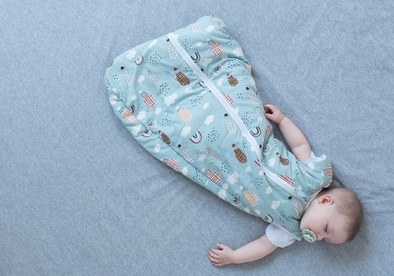
- Or a well-fitted baby sleep bag, used according to the manufacturer’s recommendations.
Where blankets are used, staff should place your baby feet-to-foot, meaning their feet are at the bottom end of the cot, and tuck the blankets in. This stops your baby wriggling down under the covers.
What must be left out
Cots must not contain extra items: no pillows, no toys, no cot bumpers, no loose bedding, no wedges and no straps. Sleep comforters are for children over 12 months only and your baby’s head must never be covered.
How should nursery staff monitor a sleeping baby?
Sleeping children must be checked frequently and stay within sight and hearing of staff. Babies under 6 months need an adult in the room. Monitors are allowed for babies over 6 months, and staff must be able to see and hear the child.
Your baby won’t be left alone in a room out of earshot. A monitor doesn’t take the place of physical checks, and for a baby under 6 months it doesn’t replace the adult who has to be there. If you’re touring day nurseries and see a screen at the nursery desk, ask which age group it covers and where staff are while it’s on.
The guidance requires frequent checks but doesn’t set an interval, so nurseries decide their own and write it into their safer sleep policy. Many check every 10 minutes and record each one on a sleep chart. Ask what the interval is, who does the checks and how they’re recorded. If the answer is vague, ask to see the safer sleep policy.
How do nurseries prevent babies from overheating while sleeping?
Overheating raises the risk of SIDS, so heads must stay uncovered and bedding stays light, tucked no higher than the shoulders. The recommended room temperature for babies aged 12 months and under is 16°C to 20°C, and staff check by touch.
The Department for Education’s safer sleep guidance requires that children don’t get too hot or cold. The 16°C to 20°C range is a recommendation, not a rule. Rather than using a thermometer, staff feel a baby’s chest or the back of their neck. Cool hands and feet are normal and don’t mean your baby is cold. If their skin feels clammy or sweaty, staff take a layer off.
You can ask how the baby room temperature is monitored, and what staff do differently on a hot afternoon.
What happens if my baby falls asleep in a pushchair or car seat?
A baby aged 12 months and under who falls asleep in a pushchair or car seat must be moved into their cot on return to the setting. Children over 12 months should be moved to their own sleep space where possible.
The Department for Education’s safer sleep guidance says a lie-flat pram or pushchair shouldn’t be a child’s main sleep space, whatever their age. That refers to where a nursery plans for children to sleep, not to a baby nodding off on the way back from the park. Staff aren’t expected to keep them awake.
What if my baby sleeps differently at home?
Tell the nursery how your baby naps: the usual times, how long they sleep, what settles them and which sleep bag you use. Staff will build a routine around that where they can, as long as it doesn’t cross a safer sleep requirement.
Most of your routine can be preserved, whether it’s a familiar song or the order you do things in. But if they sleep on their tummy at home, or only drop off in a bouncy chair, that can’t happen in a nursery setting. Keep in mind that naps at nursery are different to naps at home. They’re usually shorter and noisier, and it can take a couple of weeks for your baby to adjust.
What should I ask my nursery about safe sleep?
The important safe sleep questions cover four things: where your baby sleeps, how often staff check on them, who stays in the room with babies under 6 months and what the written policy says.
Here’s a list of questions you can take with you when you visit:
- Where will my baby sleep, and will they have their own cot?
- What does your safer sleep policy say, and can I read it?
- How often do you check babies while they’re asleep, and how is that recorded?
- Who is in the room when babies under 6 months are sleeping?
- What bedding or sleep bags do you use?
- How do you check that babies don’t get too hot?
- What happens if my baby falls asleep in the pushchair on the way back from a walk?
- What safer sleep training have staff had, and when was it last refreshed?
You’ll find more to cover on a visit in this guide to questions to ask a nursery, which runs through ratios, settling, food and fees alongside safety.

Have you started looking for a nursery near you?

What should I do if I’m worried about how my baby sleeps at nursery?
Take it in stages, starting with the people who look after your baby.
Step 1: Ask what you saw
Tell your baby’s key person or the room leader what you saw, and ask them to explain it. There may be a reason that isn’t obvious from where you were standing.
Step 2: Ask to see the safer sleep policy
Ask how it works day to day in the baby room, and whether what you saw matches what’s written down.
Step 3: Speak to the manager
If the answers don’t reassure you, or you’re told something that contradicts the policy, sit down with the nursery manager and explain your concerns.
Step 4: Put it in writing
Registered nurseries must have a complaints procedure, investigate written complaints and tell you the outcome.
Step 5: Contact Ofsted
Ofsted regulates early years provision in England. Contact them if your concern is about how the whole nursery is run, or whether it’s meeting EYFS requirements including safer sleep.
If a child is at immediate risk, contact Ofsted or your local authority straight away.
Next steps
If you’re choosing a day nursery, safe sleep is one of the easier areas to test on a visit.
You can ask to see the baby room at nap time, read the sleep policy and notice how readily staff answer questions about nap time.
Search for nurseries in your area on daynurseries.co.uk to compare Ofsted-registered settings and read reviews from other parents.
FAQs
Can my baby have a comforter or dummy at nursery?
Dummies aren’t on the list of banned cot items, but practice varies between settings, so ask how yours handles them at nap time. Comforters are different: they’re for children over 12 months only, so a younger baby’s cot stays clear until then.
At what age do the safer sleep requirements stop applying?
The detailed requirements on back sleeping, cots and clear sleep spaces apply to children under 2, and the cot rule only applies to babies aged 12 months and under. Older children still need their own sleep space and appropriate supervision under the EYFS welfare requirements.
Do childminders follow the same safe sleep rules?
Yes. The EYFS applies to all early years providers registered in England, including childminders working from their own home. A childminder must meet the same requirements on sleep position, cots, bedding and supervision as a large nursery does.
Related Articles

Expert advice straight to your inbox
Join our growing community for clear, expert guidance on finding, choosing and paying for a nursery.
