
If your return-to-work date is marked in the calendar, you’re probably already weighing up childcare options, whether your baby is here or still on the way.
It’s a big step to picture someone else giving your baby a bottle or settling them for a nap, but knowing what to look for in a baby nursery can make it easier.
Let’s look at when to start your baby nursery search, what to look for and ask, and what to do if your first choice is full.

Table of contents
- When should I start looking for a nursery for my baby?
- How do I find a nursery for my baby?
- What should I look for in a nursery for a baby?
- A dedicated baby room
- Warm relationships with staff
- Staffing and ratios
- Sleep and naps
- Milk, bottles and weaning
- Individual routines
- Settling-in sessions
- Communication with parents
- Outdoor time and sensory play
- What should I ask when visiting a nursery for my baby?
- How can I tell if a nursery is right for my baby?
- How much does nursery for a baby cost?
- What if the nursery I want doesn't have a baby place?
- FAQs
 At a glance
- Start early: Many parents start looking during pregnancy.
- Look at the people before the facilities: A key person who knows your baby’s cues is more important than fancy new equipment.
- Check that your baby’s routine will be followed: Ask how the nursery handles naps, feeds and weaning.
- Keep a backup: Join more than one waiting list, and don’t let one inspection rating or review replace your own experience of a nursery.
When should I start looking for a nursery for my baby?
Start looking for a nursery during pregnancy, or at least six months before you return to work. Baby places are the hardest to secure because strict staff ratios keep baby rooms small, and popular midweek days often fill up first.
In practice, a baby place usually only frees up when an older child moves up to the next room, and what’s available depends on the days you need. A nursery might have space on Mondays and Fridays but nothing midweek. Joining a waiting list also doesn’t guarantee a place, and many nurseries prioritise siblings of children already attending. Our guide to nursery waiting lists explains how they work and what deposits to expect.
If you’re unsure when to look for a nursery, work back from your return-to-work date and allow two to four weeks for settling in. When you shortlist nurseries, check that each one takes babies of the age yours will be when they start, as some only accept children from a certain age.
If you’re starting your search later, places still come up as families move house or change their working patterns. Phone nurseries rather than relying on their websites, join several waiting lists, and ask to be told about cancellations. Being flexible helps too: consider different days, a nursery near work rather than home, or starting with fewer days and adding more later. Childminders can also be a good option, as they often have more flexibility than nurseries.
How do I find a nursery for my baby?
If you’re not sure how to choose a nursery, these steps will help you narrow down your options.
- Work out when you need childcare, including the start date, days and hours.
- Decide how far you’re prepared to travel, and whether you’d prefer a nursery near home or work.
- Set a realistic budget and check whether you’re eligible for funded hours or Tax-Free Childcare.
- Search for nurseries near you that take babies.
- Shortlist three to five nurseries, then read their inspection reports and parent reviews.
- Contact each nursery to ask about baby places, waiting lists and fees.
- Visit your favourites, ideally while the baby room is in use, before you decide.
A search for “baby nursery near me” will bring up plenty of local results, but it won’t show you the minimum age each nursery takes, what inspectors found or what other parents think. On daynurseries.co.uk, you can search by location and compare facilities, fees and verified parent reviews in one place.
What should I look for in a nursery for a baby?
Look at the baby room, the staff and how the nursery handles the everyday things that matter most at this age, from naps and feeds to settling in and keeping you updated.
A dedicated baby room
In a baby room nursery, under-twos have their own room rather than sharing with toddlers.
Look for:
- Clear floor space to crawl and pull up
- Soft areas for babies who aren’t mobile yet
- Toys suited to their age, such as treasure baskets and board books
A calm, well-organised room with space to move is more important than expensive equipment or fancy decor.
Warm relationships with staff
Babies feel secure when the same few adults respond to them quickly and consistently. Your baby’s key person takes the lead on their care, learns their cues and is your main contact. You may also hear the term “key worker”, depending on the nursery and where in the UK you live.
When you visit, ask:
- Who covers when your baby’s key person is off sick or on holiday.
- How long the baby room staff have worked there, because familiar faces help your baby form a steady bond.
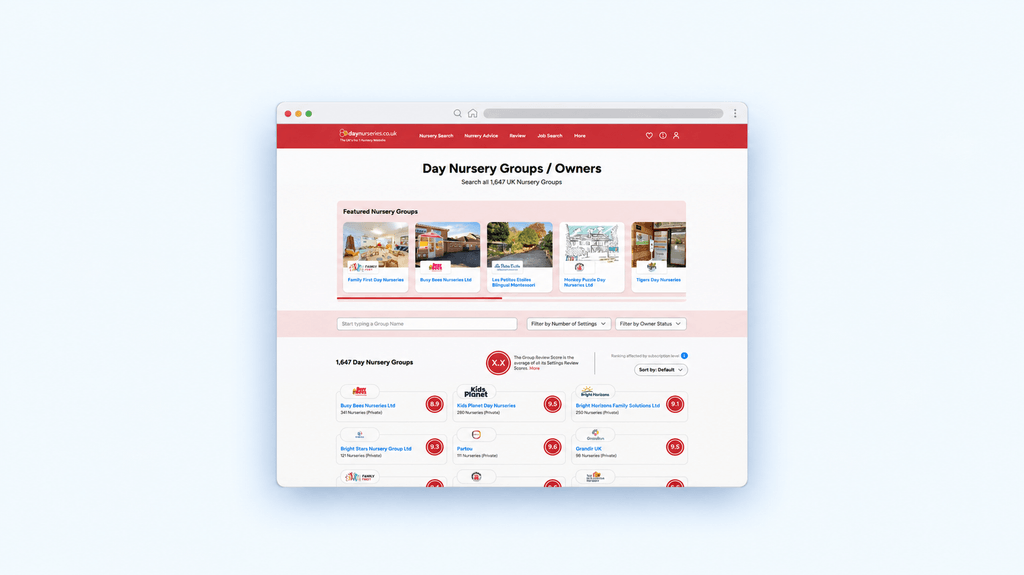
Research nursery groups
Find out more about nursery groups, the settings they run and what parents say about them.
Staffing and ratios
Staff-to-child ratios vary slightly across the UK. In England, for example, there must normally be at least one staff member for every three children under two. Check the rules where you live, as requirements differ between nations.
These ratios are a legal minimum, not a sign of quality. It’s more important to look at who the staff are and how consistently they care for your baby.
Ask:
- how the room stays in ratio over lunch breaks
- how many staff hold early years qualifications
- how often agency staff provide cover
Our guide to staff-to-child ratios sets out the rules in each nation.
Sleep and naps
Ask where babies sleep and how often staff check on them, and whether those checks are written down. The Lullaby Trust‘s safer sleep advice is to put babies to sleep on their back, in a clear cot with a firm, flat, waterproof mattress.
Our guide to safe sleep for babies at nursery explains what to expect.
Milk, bottles and weaning
If you’re breastfeeding, ask whether you can come in to feed and how staff store and warm expressed milk. If your baby has formula, check whether you need to supply it.
The NHS advises starting solid foods at around six months, so agree with the nursery which foods your baby has already tried at home. Check whether the nursery provides meals for weaning babies, how they prepare food for their stage (purées, mashed food, or finger foods), and whether you can see a sample menu. Ask how allergies and dietary requirements are recorded and how every member of staff knows about them.
Individual routines
Many parents worry their baby will have to fit a fixed nursery timetable.
Ask:
- Whether staff follow your baby’s own nap and feed times or put every baby down after lunch.
- How they’ll learn what comforts your baby, such as a dummy, a comforter or being rocked.
- How you’ll keep the nursery up to date when your baby’s routine changes.
Settling-in sessions
Settling-in sessions let your baby get to know the room and their key person while you’re still nearby.
Ask:
- How many sessions the nursery offers, whether they’re free and whether you can add more if your baby finds separation hard.
- How staff comfort a baby who’s struggling.
Find a great nursery
 15,000+ day nurseries
 3,000+ new reviews every month
 260,000+ verified reviews
Communication with parents
At pick-up, you’ll want to know how much milk your baby drank, when they napped, how many nappies they had and what they got up to. Some nurseries use an app, while others use a written sheet or a chat at the door.
Outdoor time and sensory play
Babies learn by touching, crawling and exploring.
Ask
- How often babies go outside and whether there’s a safe space for those who can’t walk yet. A
- What messy play looks like too, such as water, paint or cooked pasta.
What should I ask when visiting a nursery for my baby?
Ask every nursery the same questions so you can compare:
- Who would be my baby’s key person, and who covers when they’re away?
- How many babies are usually in the baby room?
- How do you manage individual sleep and feeding routines?
- Where do babies sleep, and how are they checked?
- How do you support breastfeeding, expressed milk or formula feeding?
- What happens if my baby won’t eat or sleep?
- How do settling-in sessions work?
- How will I hear about my baby’s day?
- How often do babies go outside?
- How do you manage allergies and medicines?
- When do babies move up from the baby room, and how do you prepare them?
Our checklist of questions to ask a nursery also covers fees and policies.
How can I tell if a nursery is right for my baby?
A nursery is likely to suit your baby if staff respond to babies warmly and quickly, know each child’s routine and personality, and the room feels calm but stimulating. Visit to see this for yourself, then check inspection reports and parent reviews to confirm your impression.
Watch the baby room for 10 minutes before you start asking questions. Good signs include:
- Staff on the floor at the babies’ level
- A crying baby picked up within a minute or two
- Staff talking to babies during nappy changes
Notice how staff respond when babies become upset and whether they appear attentive to each child’s needs.
Then read the nursery’s latest inspection report and verified parent reviews. Ofsted inspects nurseries in England, the Care Inspectorate in Scotland, Care Inspectorate Wales and the local Health and Social Care Trust in Northern Ireland. Ratings and reviews only give you part of the picture, so weigh them alongside what you saw and heard on your visit. If a nursery looks right on paper but leaves you uneasy, go back with questions before you commit.
How much does nursery for a baby cost?
Nursery fees vary by location, hours, and what’s included, such as meals and nappies. Childcare for babies usually costs more than for older children because babies need more staff per child.
Government help depends on where you live:
- In England, eligible working parents can get up to 30 hours of funded childcare a week from the term after their baby turns nine months.
- In Scotland and Wales, funded hours generally start at age two or three.
- In Northern Ireland, the Childcare Subsidy Scheme takes 15% off your bill if the nursery takes part.
- Tax-Free Childcare is available across the UK if you’re eligible.
Our guide to help with childcare costs explains each scheme, who qualifies and how to apply.
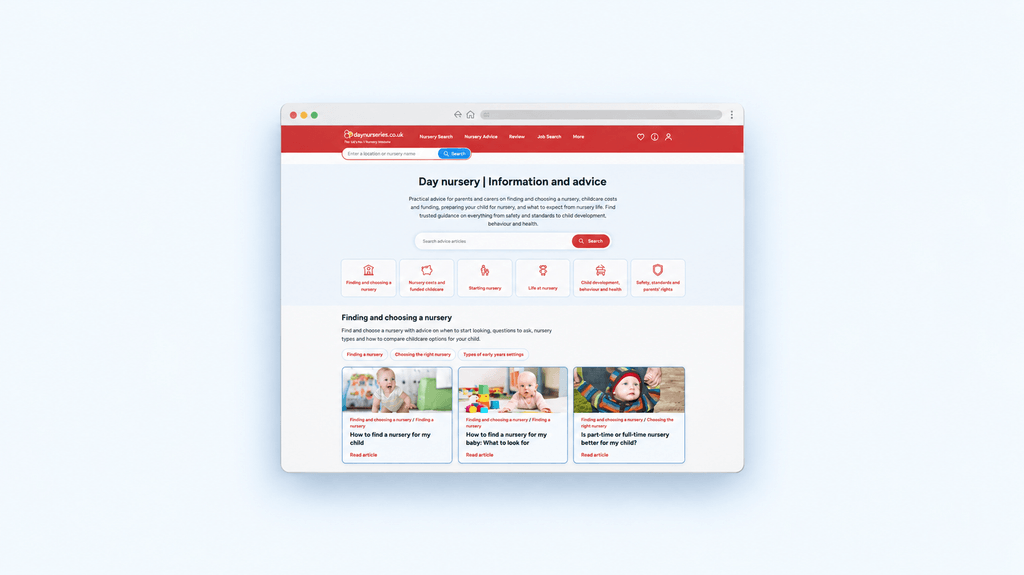
More nursery advice for parents
From settling-in tips to understanding funded hours, find guidance to help you choose with confidence.
What if the nursery I want doesn’t have a baby place?
If your preferred nursery has no baby places, join its waiting list and ask whether different days or a later start date would work. Meanwhile, look at other nurseries or a childminder, as you can often move later when a place opens up.
Ask the nursery when baby places usually come up. Many free up at the start of the school year, when the oldest children leave for school, and others move up a room.
Don’t rely on one nursery. Search daynurseries.co.uk for others nearby, because a place at your second choice is better than no childcare when you go back to work. If you take a place elsewhere and plan to move later, check the notice period so you don’t pay for two places at once.
Next steps
- Search locally: Find nurseries near your home or workplace that care for babies.
- Compare your options: Look at facilities, opening hours, the type of childcare offered, fees, inspection reports and parent reviews.
- Check availability: Shortlist a few nurseries, ask about places for your baby on the days you need, and join waiting lists.
- Visit before deciding: Ask how staff will follow your baby’s routine, and watch how they interact with the babies in their care.
FAQs
Is it normal for my baby to cry at nursery drop-off?
Yes. Separation anxiety is a normal part of development between six months and three years, and often starts from around eight months. Many babies settle within a few minutes of a parent leaving. Say a short, consistent goodbye rather than slipping out, so your baby learns that you leave and come back.
How long does it take a baby to settle at nursery?
Many babies settle within a few weeks, but it varies. Short, regular sessions and a consistent key person help. If your baby is still very unsettled after several weeks, talk to their key person about adjusting the routine.
How do I choose a good nursery for my baby?
Choose a nursery where staff respond warmly to babies, and give clear answers to your questions. If you’re torn between two, visit again at a busier time of day, such as mid-morning or lunchtime.
When should I put my baby’s name down for nursery?
Put your baby’s name down once you’ve visited, which for popular nurseries often means during pregnancy. Many nurseries charge a registration fee or deposit, which may be non-refundable. Ask about fees before joining several waiting lists, and check whether the fee comes off your first bill.
What age can a baby start nursery?
Some nurseries accept babies from around six weeks old, while others have a higher minimum age. The age babies start nursery varies with parental leave and family circumstances, so always check the nursery’s minimum starting age. Babies often start between 6 and 12 months, when parental leave ends. Not every nursery takes under-ones, so whether you need a place for a young baby or a nursery for a 1-year-old, check the youngest age first.