It is 7.30 am. Your child has a runny nose, a bit of a cough and absolutely no interest in staying in bed.
So, do you take them to the nursery?
For most parents, this is where nursery sickness policies suddenly become very important.
The good news is that a cold does not automatically mean a day at home. Current guidance in England says children with mild respiratory symptoms, such as a runny nose, sore throat or slight cough, can generally continue attending childcare if they are otherwise well and do not have a high temperature. Guidance varies across the UK, so parents should also check the advice for their nation and their nursery’s own sickness policy.
That matters because young children get colds often. The NHS says children have around 5 to 8 colds a year on average, largely because they encounter many different cold viruses while their immune systems develop.
But there is a line between “a bit sniffly” and “not well enough for a nursery”.
Here is how to tell the difference.
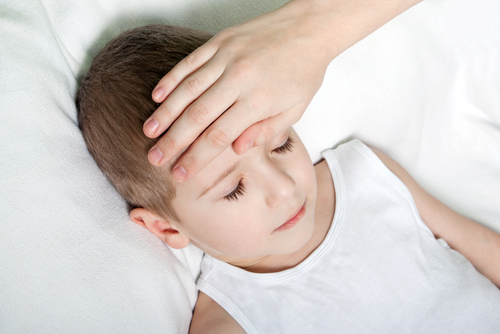
Table of contents
- At a glance
- What is a nursery sickness policy?
- When should your child stay off nursery?
- Can my child go to nursery with a cold?
- When should a cold mean a day at home?
- Can my child go to nursery with a cough?
- Can my child go to nursery with a temperature?
- What is the 48-hour rule for nursery?
- Nursery exclusion periods for common childhood illnesses
- Is the guidance the same across the whole UK?
- Do all nurseries have the same sickness policy?
- What happens if my child becomes ill at nursery?
- Can nursery give my child medicine?
- How do I know if my child is well enough for nursery?
- What can parents do to reduce infections at nursery?
- The short answer
- Next steps
- FAQs
Table of contents
- At a glance
- What is a nursery sickness policy?
- When should your child stay off nursery?
- Can my child go to nursery with a cold?
- When should a cold mean a day at home?
- Can my child go to nursery with a cough?
- Can my child go to nursery with a temperature?
- What is the 48-hour rule for nursery?
- Nursery exclusion periods for common childhood illnesses
- Is the guidance the same across the whole UK?
- Do all nurseries have the same sickness policy?
- What happens if my child becomes ill at nursery?
- Can nursery give my child medicine?
- How do I know if my child is well enough for nursery?
- What can parents do to reduce infections at nursery?
- The short answer
- Next steps
- FAQs
At a glance
- A runny nose is not automatically a reason to stay home. If your child is otherwise well and has no high temperature, they can usually attend.
- A mild cough is usually not a reason to stay home either. What matters is your child’s overall health, not simply the presence of a cough.
- A high temperature changes things. Keep your child at home until the temperature has gone down and they are well enough to return.
- Vomiting or diarrhoea means a 48-hour break. The period starts after the last episode.
- Some infections have specific exclusion periods. Examples include chickenpox, scarlet fever, impetigo, and whooping cough.
- Your nursery may have additional rules. Always check its own nursery sickness policy as well as the relevant public-health guidance.
What is a nursery sickness policy?
A nursery sickness policy is essentially the setting’s rulebook for what happens when children are ill.
It should tell parents what the nursery considers too unwell for attendance, which infections require children to stay away, what happens if a child becomes ill during the day and how medicines are handled.
It is also about more than protecting one child.
Nurseries are unusually sociable places. Small children play close together, share toys, touch the same surfaces and often need help with eating, toileting and personal care. UK Health Security Agency guidance notes that early-years settings have particular infection-control challenges because of close contact, frequently touched surfaces and shared toys and furnishings.
That does not, however, mean that nursery needs to become a no-runny-nose zone.
The current UKHSA guidance makes an important distinction: children with mild respiratory symptoms who are otherwise well and have no high temperature can continue attending childcare.
A nursery sickness policy therefore needs to balance two things: keeping infectious illness from spreading and allowing well children to carry on with normal life.
When should your child stay off nursery?
Forget the idea that every symptom automatically means “nursery closed”.
A better question is:
Can my child comfortably manage a normal nursery day?
Can they play? Eat? Drink? Join activities? Interact with other children? Do they have enough energy to cope without needing significantly more one-to-one care?
If the answer is no, staying home may be the sensible option even if there is no formal exclusion period for the illness.
You should also keep your child at home when public-health guidance specifically says they should not attend.
That includes illnesses such as vomiting and diarrhoea, chickenpox, scarlet fever and impetigo, among others. The current UKHSA exclusion table sets out the recommended periods for specific infections.
And there is an important distinction here: a public-health exclusion period is not the same thing as a nursery’s own attendance policy.
Your nursery can have its own procedures for deciding whether a child is well enough to remain in the setting.
Can my child go to nursery with a cold?
Usually, yes.
A child with a mild cold, runny nose, sore throat or slight cough can generally attend nursery if they are otherwise well and do not have a high temperature. This is the current advice for children in education and childcare settings.
And, realistically, this is important.
Children can have several colds a year. The NHS estimates 5–8 colds annually on average, with younger children gradually getting fewer as they develop immunity.
So a child who arrives at breakfast with a slightly blocked nose but is happily eating toast, asking for their favourite jumper and racing around the kitchen is very different from a child who is floppy, feverish and miserable.
When should a cold mean a day at home?
Keep your child home if the cold comes with:
- a high temperature
- marked tiredness or unusual sleepiness
- difficulty breathing
- significant difficulty eating or drinking
- symptoms that stop them participating normally
- signs that the illness is becoming more serious.
If your child is under 2, particularly if they were born prematurely or have a heart condition, be especially alert to respiratory symptoms because these children can be more vulnerable to serious RSV illness.
If you are worried about your child’s breathing, hydration, alertness or general condition, contact NHS 111, your GP or seek urgent help as appropriate.
Can my child go to nursery with a cough?
A slight cough usually doesn’t mean your child needs to stay at home.
Current UKHSA guidance says children with mild symptoms, such as a slight cough, can continue attending if they are otherwise well and do not have a high temperature.
This is worth remembering because coughs can hang around after the rest of a cold has disappeared.
Look at the child, not just the cough.
A child who is chatting, playing, drinking normally and breathing comfortably may be well enough for nursery.
A child who is struggling to breathe, unusually tired, feverish or unable to take part in normal activities needs a different approach.
Good respiratory hygiene still matters. UKHSA recommends covering coughs and sneezes with a tissue, disposing of used tissues and cleaning hands afterwards.
Can my child go to nursery with a temperature?
No. If your child has a high temperature, they should stay at home.
The NHS advises keeping a child off nursery or school while they have a high temperature. They can return when the temperature has gone and they are well enough to resume normal activities.
A high temperature in a child is generally 38°C or above.
One important point: don’t think of paracetamol as a ticket back through the nursery door.
If your child needs medicine to bring down a fever, that doesn’t necessarily mean they are well enough to spend the day playing, eating, and taking part in activities.
Once the temperature has gone down and your child is genuinely feeling better, they can generally return unless the illness itself has a separate exclusion period.
What is the 48-hour rule for nursery?
The 48-hour rule applies to vomiting and diarrhoea.
Your child should stay away from nursery until they have had at least 48 hours without vomiting or diarrhoea.
The 48 hours begins after the last episode.
So if your child last vomits at 6 pm on Monday, you count from that episode rather than from when the illness first started.
As per UKHSA instructions, children with diarrhoea and vomiting should stay away from settings until 2 days after symptoms stop.
This is one of the rules worth taking seriously even when your child seems to have bounced back remarkably quickly.
Stomach bugs can move rapidly through childcare settings, and UKHSA identifies hand hygiene as particularly important for controlling infections that cause vomiting and diarrhoea.
Nursery exclusion periods for common childhood illnesses
Here is the quick-reference version.
| Illness or symptom | Can they attend nursery? | Current guidance on exclusion |
| Cold/runny nose | Usually yes, if otherwise well and no high temperature | No specific exclusion period |
| Mild cough | Usually yes, if otherwise well and no high temperature | No specific exclusion period |
| High temperature | No | Stay home until the temperature has gone and the child is well enough |
| Vomiting/diarrhoea | No | At least 48 hours after symptoms stop |
| Chickenpox | No | 5 days from when the rash first appears |
| Hand, foot and mouth disease | England: generally yes if otherwise well | No public-health exclusion period in current England guidance |
| Conjunctivitis | Generally yes | No public-health exclusion period |
| Scarlet fever | No | 24 hours after starting antibiotics |
| Impetigo | No | Until all blisters have crusted or 2 days after starting antibiotics |
| Whooping cough | No | Until 2 days of antibiotics, or 21 days from onset if no antibiotics |
These are public-health exclusion periods, not a universal nursery attendance rule. The current UKHSA table was updated on 7 September 2026 and applies to early-years and education settings in England.
For example, current guidance says:
- Chickenpox requires exclusion until 5 days after the rash first appears
- Scarlet fever requires exclusion until 24 hours after antibiotics start
- Impetigo requires exclusion until all blisters have crusted or 2 days after antibiotics begin
- Whooping cough requires exclusion until 2 days after starting antibiotics, or 21 days from the onset of symptoms if antibiotics are not taken
- Conjunctivitis has no public-health exclusion period
- Hand, foot and mouth disease has no public-health exclusion period in England.
That last point is a good example of why parents should not rely on a generic internet list.
Is the guidance the same across the whole UK?
No. This is where “UK guidance” can become misleading.
Health policy is devolved, and childcare guidance differs across England, Scotland, Wales and Northern Ireland.
The current UKHSA exclusion table applies to England. The NHS also makes clear that the EYFS statutory framework applies to England, with different early-years standards in Scotland and Wales.
Hand, foot and mouth disease is a useful example.
In England, current UKHSA guidance says there is no public-health exclusion period, meaning a child who has the infection can attend if otherwise well.
NHS information in Scotland currently takes a different approach and advises keeping a child with hand, foot and mouth disease away from nursery or school until they are better.
So if your child attends nursery in Scotland, don’t simply copy an England-based exclusion table from a parenting website.
Check the guidance for your nation and your individual nursery.
Do all nurseries have the same sickness policy?
No.
This is one of the most important things parents can miss.
Official public-health guidance tells settings when exclusion is recommended to reduce infection transmission. Individual nurseries also have their own policies covering attendance, collection, medication and what happens when a child becomes ill.
UKHSA advises settings should have a local policy covering appropriate exclusion or isolation and procedures for contacting parents or carers when children become unwell.
So before your child’s first day, find out:
- What counts as a high temperature
- Whether the nursery has rules about persistent coughs
- What its vomiting and diarrhoea policy says
- Which infectious illnesses must be reported
- Who can collect your child
- How quickly you are expected to collect them
- How medicines are administered
- What paperwork is required.
That five-minute conversation can be surprisingly useful when you are trying to make a decision at 7 am.
What happens if my child becomes ill at nursery?
If your child becomes unwell during the day, staff will normally follow the nursery’s illness procedure.
Depending on the symptoms, they may:
- assess how your child is feeling
- separate them from other children where appropriate
- contact you or an emergency contact
- ask you to collect them
- follow their procedures for caring for your child until collection.
UKHSA guidance specifically says childcare settings should have procedures for contacting parents or carers when children become unwell. (GOV.UK)
Keep your nursery’s telephone number somewhere you can access quickly, and make sure the setting has current emergency contact details.
Can nursery give my child medicine?
Possibly, but the rules depend on the setting and the type of medicine.
In England, the current EYFS framework applies to registered early-years providers including nurseries and childminders.
Nurseries will normally have a medication policy explaining what staff can administer, what consent is needed and what records must be kept.
The important thing is not to assume that a nursery will give your child paracetamol because you ask.
Ask:
- Whether written parental consent is required
- Which medicines staff can administer
- Whether prescription instructions are needed
- How doses are recorded
- When parents are informed.
For regulated childcare in England, medicine administration and record-keeping are covered by the applicable early-years requirements.
How do I know if my child is well enough for nursery?
There is no magic formula.
Instead, run through this quick morning test.
- Can they function normally? Are they interested in playing, talking and joining in?
- Can they eat and drink? A child who is barely drinking needs more attention than a child who has a blocked nose.
- Do they have a high temperature? If yes, keep them at home.
- Are they comfortable? A child who is miserable, unusually sleepy or needing constant one-to-one care may not be ready for nursery.
- Is there a specific exclusion period? Check before making assumptions.
- Would you be comfortable leaving them for several hours? This is not an official test, of course. But it can be a useful reality check.
A child does not need to be completely symptom-free before returning. Mild respiratory symptoms can remain after the child has recovered enough to return to normal activities. Current guidance specifically allows otherwise well children with mild respiratory symptoms to continue attending.
What can parents do to reduce infections at nursery?
You cannot create a germ-free nursery. Nor should you try.
Children will encounter viruses. The practical goal is to reduce unnecessary transmission.
UKHSA recommends:
- Frequent handwashing with soap and water
- Good cough and sneeze etiquette
- Throwing used tissues into a bin
- Cleaning hands after handling respiratory secretions
- Regular cleaning of frequently touched objects and surfaces
- Good ventilation.
For very young children, this is particularly important because they are still learning to wash their hands properly and may frequently touch their faces, toys and other children.
The short answer
So, can your child go to nursery with a cold?
If it is a mild cold, they have no high temperature, and they are otherwise well enough to play, eat, drink and take part in their normal day, current guidance says they can generally attend.
A fever, significant illness, vomiting, diarrhoea or an infection with a specific exclusion period is a different matter.
And when the guidance feels complicated, remember the simplest rule of all:
Don’t judge the nose. Judge the child.
A little sniffle is part of growing up. A child who is genuinely unwell needs a day of care, rest and recovery.
Your nursery’s own sickness policy is the final piece of the puzzle.
Next steps
If your child wakes up with a runny nose tomorrow morning, you do not necessarily need to cancel nursery.
Instead:
- Check how they actually feel: A sniffly but energetic child is different from a feverish, exhausted child.
- Check the nursery sickness policy: It may have additional rules.
- Check the relevant public-health guidance: Especially if you suspect an infectious illness.
- Tell the nursery when your child has a diagnosed infectious illness: This can help the setting monitor possible spread and take appropriate precautions. UKHSA recommends that parents and carers inform settings about diagnoses of infectious diseases.
- Get medical advice if something doesn’t feel right: If your child is struggling to breathe, unusually difficult to wake, becoming dehydrated, seriously unwell, or you are worried about their symptoms, seek appropriate NHS advice.
FAQs
How long should a child be fever-free before returning to nursery?
There is no universal UK-wide “24-hour fever-free” rule covering every illness.
Current NHS advice is to keep a child with a high temperature away until the temperature has gone down and they are well enough to return.
If the fever is part of a specific infectious illness, follow that illness’s exclusion period as well.
Can my child go to nursery with a runny nose?
Usually, yes.
A runny nose is a mild respiratory symptom that does not normally require exclusion when the child is otherwise well and has no high temperature. (GOV.UK)
Can my child go to nursery if they are taking antibiotics?
Often, yes, but it depends on the illness.
Taking antibiotics does not automatically mean a child must stay home. However, some infections have specific exclusion periods linked to antibiotic treatment.
For example, this GOV.UK guide suggests that children with scarlet fever or Group A streptococcal infection should stay away until 24 hours after starting antibiotics.
Other infections have different rules, so check the specific illness rather than assuming antibiotics have started.
Can nursery send my child home if they are unwell?
Yes. If staff consider your child too unwell to remain safely in the setting, they can contact you or an authorised emergency contact. A nursery’s own sickness policy should explain what happens and how collection is managed.

Find a nursery near you