Should there be more formal testing of young children?
04-Jul-13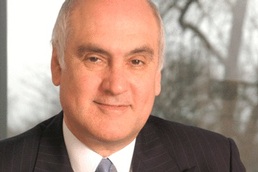
Sir Michael Wilshaw, Her Majesty’s Chief Inspector, Ofsted
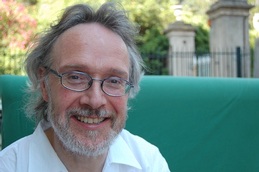
Dr Richard House, senior lecturer in Early Childhood Studies, University of Winchester
To view the results of the poll, you need to vote!
YES
Sir Michael Wilshaw, Her Majesty’s Chief Inspector, would like to see more nurseries carrying out regular assessments of children as he believes the most effective nurseries are those which regularly assess children and set high expectations.
He said: “When children arrive in the nursery or reception class, the best schools quickly assess each child in terms of key skills such as language and grasp of numbers. They use this baseline to inform teaching and support for each child. They link frequent assessments of each child’s progress to the professional development and performance management of their staff.
“Children in these schools make excellent progress, whatever their background. In such schools, only children with substantial learning difficulties or other barriers fail to achieve the benchmark level 4 in English and mathematics by the end of the primary stage.”
He would like to see “this good practice” being applied nationally.
He added: “Effective nursery and primary schools set high expectations right from the very start. In these schools, children are introduced from the first day to structures and behaviours that help their learning. Clear routines bring order and security into their lives and help build self-assurance as well as awareness of the needs of others.
“These schools and nurseries also go out of their way to engage with parents who may themselves have had a bad experience of education. They make strong use of family support and social workers, and routinely make pre-school visits to the home to get to know the children. They also ensure that parents are engaged from the start in their children’s education.
“Most importantly, in the best nursery and primary schools there is a systematic, rigorous and consistent approach to assessment, right from the very start.”
The success of regular assessment has led Sir Michael to recommend that the Government assess children as soon as they start school instead of at the end of Reception.
NO
Dr Richard House sees Sir Michael’s push for more testing of young children as “the creeping ‘schoolification’ of early childhood in England” and questions Sir Michael’s evidence for the “best nursery and primary schools”, asking on “what criteria he bases his 'best' label”.
“If he is right about the correlation between making assessment quickly and quality of outcomes (which is open to severe doubt), it doesn’t at all necessarily follow that it is early and relentless assessment that has ‘caused’ the good outcome (there may be other associated variables that play more of a causal function).”
He added: “There is a whole host of reasons why increasing formalised assessment in early childhood is a fundamentally wrong idea.
“Sir Michael Wilshaw’s recent pronouncements on early childhood assessment are underpinned by a host of erroneous assumptions and politicised agendas. Perhaps the most compelling arguments are that, again, these proposals are entirely driven by the existing madness that is England’s school starting age; and the negative unintended side-effects of this crude bludgeon in this delicate phase of early childhood would be catastrophic.
“As of 2013, nearly nine in 10 of the world’s 205 countries have a school starting age of six or seven, and hardly any countries in the world have the effective school starting age of four that we have in England.”
He added: “England’s much mooted ‘long tail of under-achievement’ is a direct consequence of England’s inappropriate school starting age; and yet Wilshaw is proposing to ‘solve’ this and other ‘problems’ by ratcheting up the incursion of ‘schoolifying’ practices into early childhood, rather than withdrawing and deferring them.
“These changes would be catastrophic for our children’s development and well-being.”
Dr House concluded that “this proposed new schoolifying assessment measure seems to mark something that we have always feared since the Open EYE campaign was founded in 2007 – i.e. that the National Curriculum would start to first invade, and then drive, practice in the early years”.
Latest Debate News
21-Sep-22 Should nurseries ditch words 'boys' and 'girls' and use inclusive pronouns like 'they', 'them' or 'theirs'?21-Mar-22 Should smacking children be banned in England?
20-Nov-16 Should nurseries ban superhero costumes and toy weapons?
30-Jun-16 Is controlled crying harmful for babies?
16-Jun-16 Should the Government reinstate Functional Skills as an alternative to GCSE English and maths for Level 3 nursery practitioners?